
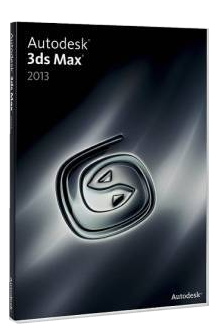
 3ds Max 2013 Autodesk® 3ds Max® 2013 and Autodesk® 3ds Max® Design 2013 software share core technology and are data and plug-in compatible. Choose either Autodesk 3ds Max for game developers, visual effects artists, and motion graphics artists along with other creative professionals working in the media design industry; and Autodesk 3ds Max Design for architects, designers, civil engineers, and visualization specialists.
Autodesk® 3ds Max® and Autodesk® 3ds Max® Design software provide powerful, integrated 3D modeling, animation, and rendering tools that enable artists and designers to focus more energy on creative, rather than technical challenges. The products share core technology, but offer specialized toolsets for game developers, visual effects artists, and motion graphics artists along with other creative professionals working in the media design industry on one hand; and architects, designers, engineers, and visualization specialists on the other.
This page will give you an idea of the key features of Autodesk 3ds Max 2013 and the system requirements of Autodesk 3ds Max 2013.
Take a look around.
The 1970s and 1980s are often referred to as the Golden Era of Malayalam cinema. This period saw the rise of acclaimed filmmakers like Adoor Gopalakrishnan, A. K. Gopan, and K. S. Sethumadhavan, who produced films that were critically acclaimed and commercially successful. Movies like "Nokketha Doorathu Kannum Nattu" (1984), "Purushan Poorathu Yaathra" (1985), and "Udyanapalakan" (1987) are still remembered for their storytelling, direction, and performances.
Malayalam cinema, also known as Mollywood, is a thriving film industry based in Kerala, India. With a rich cultural heritage, Malayalam cinema has been entertaining audiences for over a century. The industry has produced some remarkable films that have not only gained national recognition but have also made a mark globally. In this article, we'll explore the history, evolution, and key aspects of Malayalam cinema and culture. mallu aunty devika hot video exclusive
The 1990s and 2000s saw a new wave of Malayalam cinema, characterized by experimental storytelling, innovative cinematography, and non-conventional themes. Filmmakers like Adoor Gopalakrishnan, Hariharan, and I. V. Sasi continued to push the boundaries of Malayalam cinema. Movies like "Swayamvaram" (1999), "Nizhaku" (2002), and "Moksham" (2001) received critical acclaim and paved the way for a new generation of filmmakers. The 1970s and 1980s are often referred to
Malayalam cinema has played a significant role in shaping Kerala's culture and society. Films have often reflected the state's rich cultural heritage, traditions, and social issues. The industry has also provided a platform for talented actors, writers, and musicians to showcase their skills. Gopan, and K
Today, Malayalam cinema is more diverse and vibrant than ever. Filmmakers like Lijo Jose Pellissery, Amal Neerad, and Abrid Shine have gained international recognition for their unique storytelling and cinematic style. Movies like "Angamaly Diaries" (2017), "Sudani from Nigeria" (2018), and "Jallikattu" (2019) have not only been commercially successful but have also represented Malayalam cinema on the global platform.
The first Malayalam film, "Balaana", was released in 1928. However, it was the 1950s and 1960s that saw the rise of Malayalam cinema as a distinct film industry. This period witnessed the emergence of legendary filmmakers like G.R. Rao, Kunchacko, and P.A. Thomas, who laid the foundation for the industry.
Malayalam cinema and culture are intricately linked, reflecting the state's rich heritage and traditions. From its early days to the present, the industry has evolved, experimenting with new themes, styles, and storytelling techniques. As Malayalam cinema continues to grow and gain recognition globally, it remains an integral part of Kerala's cultural identity.