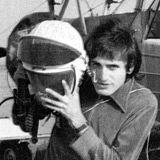
AUTOR IZ DAVNOG VREMENA KADA JE PISAO SVOJU PRVU KNJIGU „KRILATA KATEDRA”...
Poput mnogih drugih, tako je i Zoran Modli rođen sredinom prošlog veka u Zemunu i za sada je živ i zdrav. Nije odmah postao pilot. Najpre je kao odlikaš završio osnovnu školu, a onda alarmantno srozao uspeh u Prvoj zemunskoj gimnaziji. Od mature se oporavio u redakciji „Politike ekspres”, a sa dvadesetak godina proslavio kao revolucionarni disk-džokej Studija B i legendarne zemunske diskoteke „Sinagoga”. Studio B je, posle pet godina, napustio iz više razloga, a najviše zbog letenja. Od tada je jednom nogom u raznim radijima, a drugom i obema rukama u avijaciji. Pošto je bliska rodbina, a naročito najbliža – majka – očekivala da završi kakav-takav fakultet, uradio je pola posla, pa završio Višu vazduhoplovnu pilotsku školu u Beogradu.
Kao instruktor letenja, najpre na sportskim aerodromima, a zatim u Pilotskoj akademiji JAT u Vršcu, školovao je na desetine naših i stranih pilota. Mnogi od njih odavno su kapetani JAT-a, ali i drugih kompanija širom sveta. Dvadeset godina je leteo u JAT-u, a najviše vremena proveo na nikad prežaljenom boingu 727, nad kojim lamentira kad god mu se za to pruži prilika. Od ranih devedesetih pa sve do prvog poglavlja ove knjige leteo je i kao kapetan na biznis-džetovima kompanije Prince Aviation. Za njim su bezbrojni sati sjajnih iskustava. Poslednje je bilo loše, ali korisno za ovu knjigu.
Živi u Beogradu, a u mislima u svim onim gradovima na čije je aerodrome sletao.

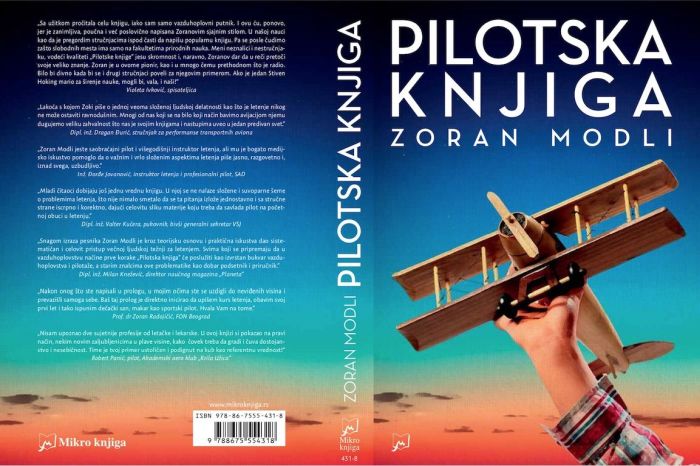
... I U OVA NOVA VREMENA, DOK OČEKUJE NOVO IZDANJE „PILOTSKE KNJIGE“.
"Zip" also implies portability—this is music optimized for pockets and playlists, for being carried in compressed form yet exploding into full bandwidth when unzipped. The sonic compression intensifies the emotional payload: short songs, instantaneous hooks, gestures that lodge in memory like talismans. The record’s power comes from restraint—saying more with less—so the listener becomes complicit, filling in spaces with their own experiences.
Ultimately, "21 Savage Metro Boomin SAVAGE MODE II zip" reads like an object lesson in curated menace—an elegant, tightly bound dossier of survival songs. It’s a study in how compression can amplify meaning: when edges are sharpened and excess excised, every syllable, every kick drum, every silence carries the weight of intent. The zip fastens the narrative shut, preserving the album as both artifact and instruction manual for moving through a world that rewards quiet ruthlessness and careful calibration. 21 Savage Metro Boomin SAVAGE MODE II zip
Culturally, the release feels like a deliberate recalibration. It reasserts Atlanta’s trap minimalism as a modern classical form—an austere, rhythm-first composition where empty space matters as much as sound. The aesthetic is ritualistic: producer tags like liturgy; ad-libs as communal call-and-response. It’s not merely music but a text for decoding behavior, fashion, and posture—how to move through streets, studios, and social media with the poise of someone who has learned to keep personal archives zipped shut. "Zip" also implies portability—this is music optimized for
Lyrically, the album archives the vocabulary of ascent and survival. “Savage” is less brazen bravado and more adaptive armor: the code learned in streets and studio sessions, the strategies that turn scarcity into leverage. It refracts themes of loyalty, loss, wealth, and consequence through stark lines and recurring imagery—diamonds as both reward and signal flare, cars as mobile altars, silence as an accomplice. Repetition in phrasing functions like a mantra; the zip that closes each refrain is also the zip that preserves the record’s interior life from dilution. Ultimately, "21 Savage Metro Boomin SAVAGE MODE II
I’ll write a vivid, engaging short discourse centered on the phrase "21 Savage Metro Boomin SAVAGE MODE II zip."
Imagine the project as a sealed hard drive found in a back alley: inside—raw confessions, cinematic trap, and production that carves negative space into architectural beats. Metro’s soundscapes are the scaffolding—minimalist yet monumental, 808s sculpted like tombstones, hi-hats ticking like nervous watches. 21’s voice is both ledger and incantation: clipped, laconic, delivering lines that read like forensic snapshots of survival and sovereignty. His cadence is a tool, a scalpel he uses to articulate trauma into aphorism—each bar a portrait in frost.
The collaboration plays with contrast. Where Metro lays vast, brooding canvases, 21 paints in economy—few colors, high definition. The emotional register spans menace and melancholy: tracks that make the passenger window tremble and the middle-of-the-night thoughts sharpen. The atmosphere is nocturnal—the kind of record that sounds best at 2 a.m., when city lights become constellations and every street has a story. The sonic textures feel compressed, like data zipped tight—no excess, no filler—so every moment hits with crystalline intensity.